Plans for 2011
Demonstration at the seventh annual Natsu Matsuri, hosted by JETAA Ottawa!
This Saturday, August 20th at noon, the Jinenkan Ottawa Dojo will perform a demonstration at the 7th annual Natsu Matsuri hosted by JETAA Ottawa! We'll be showcasing Classical Jujutsu, Kodachi (short sword), Juttejutsu (truncheon), Bojutsu (staff), Kenjutsu (sword) and Kyoketsu-Shoge (blade-and-flail).
From the JETAA Ottawa Website:
"Voted Ottawa’s hardest working Ambassador by Embassy Magazine, H.E. Ambassador Kaoru Ishikawa will be kicking off the festival with opening remarks. He will also be introducing a special guest, Ottawa’s very own Japanese pop sensation, Blaise Plant of Monkey Majik. Brothers Maynard and Blaise Plant are based in Sendai, one of the hardest hit areas by the March 11, 2011 disasters. The Plant brothers have been very active in recovery and reconstruction efforts and recently, along with other band members, donated $200,000 to Miyagi Prefecture.
You can expect to see a performance by Blaise with his guitar, Japanese martial arts demonstrations, flower arrangement demonstrations, traditional dances and there will be opportunities to participate hands on. All afternoon, a children’s tent complete with face painting, origami, and games will be set up. JETAA Ottawa will be offering free Japanese food to all attendees, while supplies last ,including for the first time, hotdogs with Japanese toppings (“JETAA dogs”). The event is free and includes a potluck."
Summer schedule
We will be recommencing Bojutsu on Sundays, starting on July 16th. As I'm sure you can appreciate from the weather we've been having, it's better to have training in the mornings, so for the remainder of the summer, it will be 9:30AM-11:30AM. This will make it a half-hour earlier than in previous years. We will be using Orlando Park- this is the park off of Alta Vista, which is behind the school across from the Heron Road Community Centre. If you're unsure how to get there, just show up at the Community Centre slightly before 9:30AM next Sunday and we'll go together. Again, be advised that if is raining the night before or morning of training, we will consider it cancelled, so watch the Web site.
Because we will be outside for Bojutsu during the remainder of the summer, keiko-gi (training gi) will not be necessary- please wear comfortable clothing and footwear suitable for outdoor activity. Be sure to bring plenty of water and sunscreen.
Also, we have permission to attend the Ottawa Medieval Sword Guild's Camping Weekend. The entire weekend is Friday, July 29th through Monday, August 1st. We will be making it formally a one-day affair: we will go there for Sunday, July 31st. Anyone attending just for the day will be charged $25, but this is for admission to the grand banquet. If you want to camp, I should be able to arrange this: the cost of camping is $15. Because we only have a couple of weeks, please let me know if you have any questions, and I will do my utmost to make proper arrangements. There is jousting, the armoured charge and archery to watch, and there are often informal training events to participate in. I will be arranging training sessions as well, dependent on weather: check back for details.
The OMSG Camping Weekend is not open to the general public; they have kindly allowed the Jinenkan Ottawa Dojo to participate. Therefore, only active members of the Dojo are allowed to join us for this activity, so as not to abuse the kindness of our hosts.
Owing to the Camping Weekend, there will not be class on Sunday, July 31st, or Monday, August 1st.
Gyokko Ryu Kosshijutsu starts on June 6th
Starting next Monday we will begin Gyokko Ryu Koshijutsu. This ancient form of dakentaijutsu, or "striking art", is a dynamic style of close-range fighing characterized by circular movement. The kanji characters for the ryu-ha name can be translated as "Jewelled Tiger School of using the fingers"; many techniques use the fingertips to attack specific "kyusho", or weak points. This style is well-known for it's focus on striking, kicking, and even aggressive blocking, though it includes joint locking, throwing and grappling techniques, making it a very complete unarmed system. Manaka Sensei described it to me as almost "a form of karate". Gyokko Ryu is historically a kind of sister school to Koto Ryu; when Manaka Sensei created the Jinen Ryu, he drew extensively on his knowledge of these two, older styles. We will explore the various levels of training in Gyokko Ryu: the Taihenjutsu Kihon Gata, Moto Gata, Torite Kihon Gata, and the Jo-, Chu- and Ge-ryaku no Maki. If you are interested in beginning martial arts training, Gyokko Ryu is an excellent starting point: a tight, compact self-defence system.
Demonstration at the Canadian Tulip Festival: Sunday, May 22nd, 12:15PM
 The Jinenkan Ottawa Dojo will perform a demonstration at the Canadian Tulip Festival, this upcoming Sunday afternoon. Join us at Major's Hill Park at 12:15PM for the demo. We're hoping for good weather, but will be there, rain or shine! The Victoria Day weekend, though long known for unpredictable weather, has never stopped anyone from enjoying the concerts and cultural shows on display at the finale of the Tulip Festival. The Jinenkan Ottawa Dojo will perform a demonstration at the Canadian Tulip Festival, this upcoming Sunday afternoon. Join us at Major's Hill Park at 12:15PM for the demo. We're hoping for good weather, but will be there, rain or shine! The Victoria Day weekend, though long known for unpredictable weather, has never stopped anyone from enjoying the concerts and cultural shows on display at the finale of the Tulip Festival.
In attempting to showcase the widest range of our martial arts, we have selected the following topics: Classical Jujutsu, Juttejutsu, Kodachi, Bojutsu, Kenjutsu, and Kyoketsu-Shoge. We hope this demonstration, spanning unarmed combat techniques, truncheon, short sword, long staff, Samurai sword, and blade-and-chain will be informative, diverse and exciting! The opportunity to perform at the Tulip Festival is a chance for our students to choose a weapon or specialty they're interested in, practice it, and then showcase it in front of a live audience. Beyond simply being an entertaining demonstration, it's a way to express the richness and breadth of the classical Japanese martial arts which the Jinenkan Ottawa Dojo learns together.
Once again, we're honored to be invited by the Japanese Pavilion of the International Friendship Village.
The demonstration will replace our usual Sunday Bojutsu class; there will be no class on May 22nd.
Military Combatives / Self-Defense workshop with Cris Anderson: Saturday, April 2nd
The Jinenkan Ottawa Dojo will host a workshop by Military Combatives instructor Cris Anderson. The workshop will be at the Heron Road Community Centre, from 9AM-1PM on Saturday, April 2nd. This will be a City of Ottawa program: the cost of the workshop is $20.
You can register online at www.ottawa.ca, or in person at any City of Ottawa recreation facility- the city is using barcode #655787. Please call the Heron Road Community Centre at 613-247-4808 for more information about registration.
For more information about the workshop itself, please call 613-263-0441 or email andy@jinenkan-ottawa.com.
The curriculum for the workshop will be, in Cris' words-
"The Military Combatives workshop will include instruction in and the history of, self-defense techniques taught to soldiers, spies, commandos and civilians during World War II. We will focus on the techniques taught by William Fairbairn, widely considered the godfather of combatives, as well as Moshe Feldenkrais, a pioneering figure in Judo and Jujutsu in Europe. These men studied both Asian and Western arts such as Jujutsu, Judo, Savate and Boxing to derive techniques that are simple, direct, effective, and easily learned. During the workshop, we will learn a little about the history of these men, their roles during the war, and the rationale behind their systems. We will also practice the releases, counters, strikes, applications and other techniques which these instructors established, and which have continued in military, law-enforcement and civilian self-defense circles to this day."
Those of you who attended workshops with Cris in the past have been quite enthusiastic about doing so in the future. Cris is an excellent and engaging instructor who combines years of traditional martial arts practice with extensive research and training in the subject of Military Combatives.
For those of you unfamiliar with Military Combatives, here is a short introduction: before the First World War was a period of increasing cultural exchange, especially between the colonial powers (the USA, Great Britain, France, Germany, etc.) and Asian in general. Japan, in particular, arose from a 250-year period of national isolation, and began sending forth cultural ambassadors, some of whom were specialists in martial arts. These ambassadors trained the first generation of Westerners skilled in Asian martial arts. In addition, many Europeans and Americans went on military, diplomatic and trade missions to Asia, and some were also exposed to various martial arts. During and between the two World Wars, many of these "martial explorers" refined personal systems of close-combat self-defense: the goal was to distill what they learned into a methodology that was simple, effective and easy-to-learn for large numbers of military or police personnel, commandos, and civilians, both male and female. There are many interesting personal stories from these early instructors: individuals such as William Fairbairn, Rex Applegate and Moshe Feldenkrais lead lives that were often the stuff of legend, and they went on to inspire whole new generations of instructors.
I've been personally interested in Military Combatives for some time; as a historical subject, it's an interesting window into a period of time that could be described as "rough-edged multi-culturalism", when many people from different cultures had to learn to relate to "foreigners" they wouldn't have had contact with a generation previous. In addition, the skills in Combatives are intended to be simple to apply, efficient in motion, and easy to learn and remember: they are an excellent springboard into martial arts in general, and are suited to both males and females of a wide range of ages and physical ability level.
For this workshop, you will only need to dress in pants with no snaps, buttons or zipper, please. T-shirt or sweat shirt is fine. Cris Anderson would have you bring a mouth guard, and groin protection. Mr. Anderson will insist that everyone sign his waiver of liability. Bring your water bottle and notebook.
Takakgi Yoshin Ryu Jutaijutsu Workshop in Mahopac New York, February 11-12th, 2011
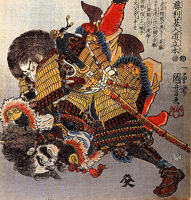 On Friday, February 11th, we will set off for Mahopac, New York, and a workshop in Takagi Yoshin Ryu Jutaijutsu. Dojo-Cho Chad Flakker, yondan and head of the Gouken Dojo, will be leading training in the first level scroll, the Shoden no Maki: this series of unarmed suwari-waza (seated techniques) and tachi-waza (standing techniques) provides a solid basis to this ancient school of Classical Jujutsu. On Friday, February 11th, we will set off for Mahopac, New York, and a workshop in Takagi Yoshin Ryu Jutaijutsu. Dojo-Cho Chad Flakker, yondan and head of the Gouken Dojo, will be leading training in the first level scroll, the Shoden no Maki: this series of unarmed suwari-waza (seated techniques) and tachi-waza (standing techniques) provides a solid basis to this ancient school of Classical Jujutsu.
Training will include strikes, kicks, locking and grappling techniques characteristic of this ryu-ha. The cost of training both Friday evening and all Saturday is only USD$50.
For more information, please visit the workshop host, the Jinenkan Kouseigogi Dojo
We invite you to contact the dojo in order to participate in this trip.
Please be advised: we will need to leave early Friday morning (February 11th) in order to join training which starts at 6PM.
Due to the necessities of travel, there will be no Bojutsu class on Sunday, February 13th.
Jinenkan fundamentals starting Monday, January 3rd
Starting our first Monday class back from the holidays, we will begin a new direction in our training to match the New Year. Having completed Koto Ryu Koppojutsu, we will retrench our understanding of Jinenkan fundamental techniques, including:
- Kamae (stances);
- Ken, Keri, Uke (striking, kicking and blocking/receiving);
- Ukemi (breakfalls and rolls); and
- Kihon Happo ("eight basic techniques").
The focus will be on building correct technique, and then conditioning through repetition. In addition, we will make ongoing body conditioning integral to continuous improvement.
|



|